
How Much Magnesium Glycinate Should I Take for Sleep? (Dosage Guide)
SpartanShopper · April 19, 2026
How much magnesium glycinate should you take for sleep? We break down the right dose by age, goal, and sleep issue — plus timing, form, and what to avoid.

Magnesium glycinate is one of the most effective natural sleep supplements available — but only if you're taking the right amount, at the right time, in the right form. Get the dosage wrong and you may either not see results or, at higher amounts, experience unwanted side effects.
This guide cuts through the confusion. Whether you're just starting out or trying to fine-tune a regimen that's partially working, here's exactly how to dose magnesium glycinate for sleep — based on current clinical evidence.
The Short Answer
For most healthy adults, 200–400mg of elemental magnesium glycinate, taken 30–60 minutes before bed, is the effective therapeutic range for sleep support.
But that one sentence skips over several important nuances. Let's break it down properly.
Elemental Magnesium vs. Total Compound Weight — Why This Matters
This is the most common source of confusion with magnesium supplements — and the reason many people either underdose or think a product "isn't working" when it is.
Magnesium glycinate is a compound: magnesium bonded to glycine. The total weight of the compound is not the same as the elemental magnesium — the amount of actual magnesium your body receives.
Magnesium makes up roughly 14% of magnesium glycinate by weight. This means:
- A capsule listed as "500mg magnesium glycinate" contains approximately 70mg of elemental magnesium
- To reach a 300mg elemental magnesium dose, you'd need approximately 2,100mg of magnesium glycinate compound
Always look for the "elemental magnesium" listed separately on the supplement facts label. Reputable brands list both. If a product only lists the total compound weight without specifying elemental magnesium, treat that as a red flag.
Recommended Dosage by Sleep Goal
For Sleep Onset — Difficulty Falling Asleep
Dose: 200–300mg elemental magnesium Timing: 30–60 minutes before bed
This range is appropriate for people who feel anxious, wired, or mentally active at bedtime. The glycine component begins to lower core body temperature — a key sleep-onset trigger — within about 30 minutes, while magnesium activates GABA receptors to quiet neural excitability.
For Sleep Maintenance — Waking During the Night
Dose: 300–400mg elemental magnesium Timing: 60 minutes before bed — some people benefit from splitting doses: 200mg afternoon, 200mg before bed
Middle-of-the-night waking is often driven by cortisol dysregulation. A slightly higher dose, with some taken earlier in the day, tends to work better for this pattern than a single pre-bed dose.
For Anxiety-Driven Insomnia
Dose: 300–400mg elemental magnesium Timing: 30–60 minutes before bed — consider pairing with ashwagandha
Racing thoughts, physical tension, and the inability to "switch off" are often the presentation of both low magnesium and elevated cortisol. Magnesium glycinate directly addresses the neurological component while ashwagandha — as found in Brainoa Sleep Cocoa — addresses the cortisol side.
Read our full guide: Magnesium Glycinate for Sleep and Anxiety
For General Sleep Quality Improvement
Dose: 200mg elemental magnesium
Timing: Before bed, daily and consistent
If your sleep isn't dramatically poor but you want deeper, more restorative rest, a maintenance dose of 200mg elemental magnesium is both effective and conservative.
Dosage by Demographics
- General adult population: 200–400mg elemental magnesium
- Women over 40 / perimenopause / menopause: 300–400mg — hormonal changes accelerate magnesium depletion, making the higher range more appropriate
- Adults over 65: 200–300mg — start lower and increase gradually as kidney function naturally declines with age
- High-stress individuals / athletes: 300–400mg — stress and intensive exercise both accelerate magnesium depletion
- People with anxiety: 300–400mg — the neurological calming effect is dose-dependent within this range
Women over 40? See our dedicated guide
The Upper Safe Limit
The Food and Nutrition Board at the National Academies has established a Tolerable Upper Intake Level (UL) of 350mg of supplemental elemental magnesium per day for adults. This is the maximum from supplements specifically — dietary magnesium from food doesn't count toward this limit.
What happens if you exceed 350mg? At doses above the UL, some people experience gastrointestinal effects — loose stools, nausea, or stomach cramps. This is your body's signal to reduce the dose.
Importantly, magnesium glycinate is significantly less likely to cause GI effects than other forms — even at higher doses — because the glycinate bond improves absorption, meaning less unabsorbed magnesium reaches the colon.
Timing: When to Take It
30–60 minutes before bed is the standard recommendation for sleep support. This gives the magnesium time to be absorbed and begin activating GABA pathways, and allows glycine's body-temperature-lowering effect to begin before you get into bed.
Split dosing is worth considering if you:
- Wake up in the middle of the night — take half in the afternoon, half at bedtime
- Have high baseline stress — maintaining steadier magnesium levels throughout the day helps regulate cortisol more consistently
- Are taking higher doses and want to minimize any GI sensitivity
Avoid taking it with calcium supplements at the same time — calcium and magnesium compete for the same absorption pathways. Take them at least two hours apart.
How Long Before It Works?
- Night 1–3: You may notice feeling slightly calmer or less physically tense at bedtime. Don't expect dramatic sleep changes yet.
- Week 1–2: Your magnesium stores are replenishing. Some people notice modest improvements — falling asleep a bit easier, less nighttime waking.
- Week 2–3: Most people report meaningful improvement in sleep quality by this point.
- Week 3–6: The full therapeutic effect. Deeper sleep, more consistent onset, better morning alertness.
Magnesium glycinate is not a sleeping pill. It doesn't sedate you. It corrects a deficiency that was interfering with your body's own sleep processes — and that correction takes time. The payoff is sustainable improvement rather than dependency.
What Form Should You Take It In?
Capsules and Tablets
The most common format. Easy to dose precisely. Look for products that list elemental magnesium clearly on the label.
Powder
Dissolves in water or warm drinks. Often allows for easier dose adjustment than capsules. Slightly faster absorption in some cases.
Functional Sleep Drinks
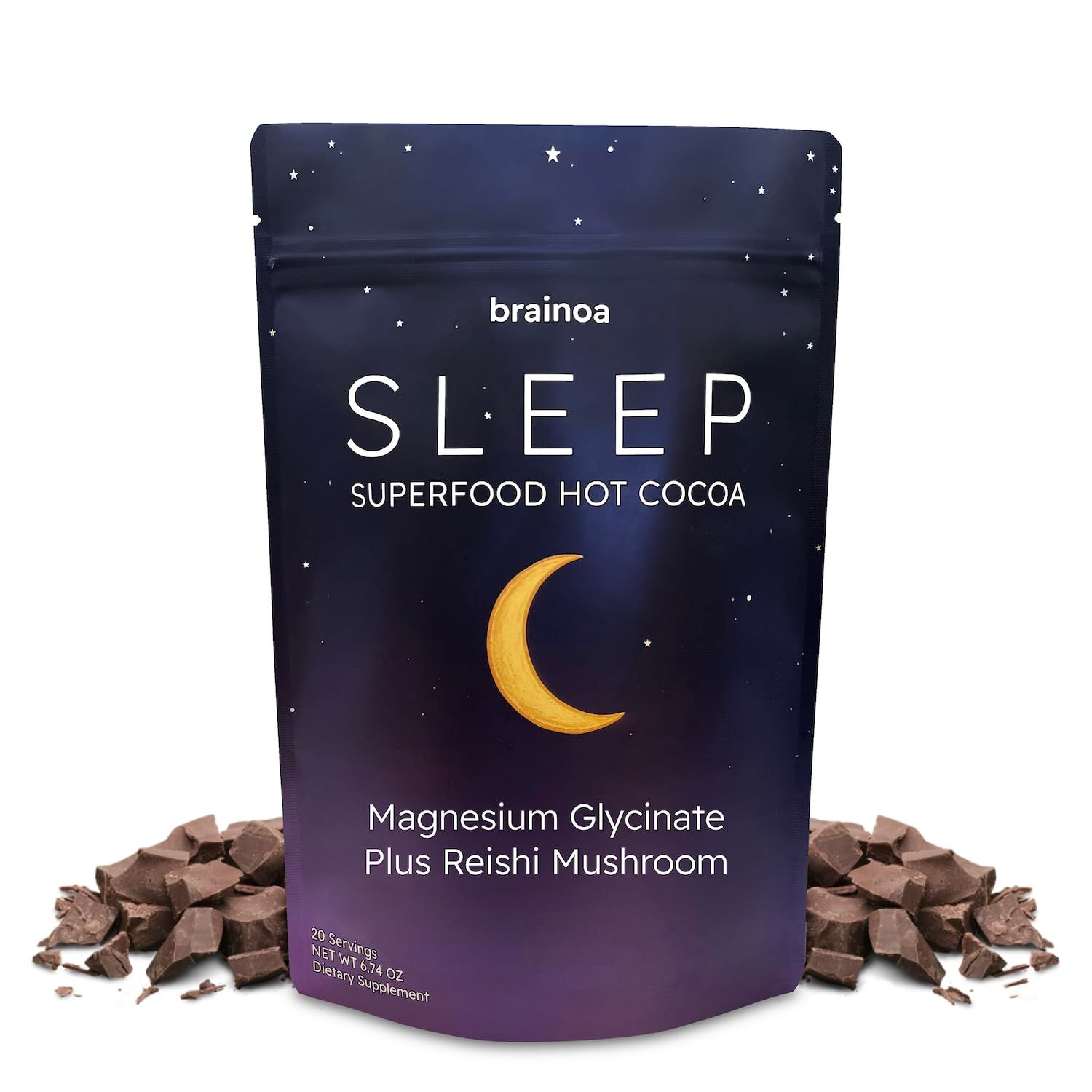
Products like Brainoa Sleep Cocoa deliver magnesium glycinate alongside complementary ingredients — ashwagandha and reishi mushroom — in a warm cocoa format. The ritual component of a warm bedtime drink is itself beneficial for sleep, and many people find the added ingredients address aspects of their sleep problems that magnesium alone doesn't cover.
See our Brainoa Sleep Cocoa review
Gummies
Often use less bioavailable forms of magnesium to achieve the right texture. Check the form carefully — many gummies use magnesium citrate or oxide rather than glycinate.
Frequently Asked Questions
Can magnesium glycinate cause insomnia?
No — magnesium glycinate does not cause insomnia. In fact, it's one of the most evidence-backed natural supplements for improving sleep quality and reducing the time it takes to fall asleep.
However, there are a few nuances worth knowing:
- Taking it at the wrong time — such as first thing in the morning — won't support sleep because it's not timed to your bedtime
- Very high doses can cause mild GI discomfort in some people, which could indirectly disrupt sleep. If this happens, simply reduce your dose
- Some people report vivid dreams in the first week or two as their sleep architecture improves and they spend more time in deeper sleep stages. This is a sign it's working, not a side effect to be concerned about
If you've heard that magnesium glycinate can cause insomnia, it's likely a confusion with other forms — particularly magnesium oxide or citrate taken at high doses, which can cause digestive discomfort that interrupts sleep.
Can I take magnesium glycinate every night?
Yes — magnesium glycinate is safe for nightly use and is not habit-forming. Consistent daily use is actually recommended to build and maintain healthy magnesium levels. Think of it as replenishing a mineral your body needs, not introducing a dependency.
How do I know if the dose is working?
Look for these positive indicators within 3–4 weeks:
- Falling asleep within 20 minutes of getting into bed
- Fewer episodes of waking during the night
- Waking up feeling rested rather than groggy
- Less physical tension or restlessness at bedtime
- Calmer, quieter thoughts in the hour before sleep
What if I'm not seeing results after 4 weeks?
Consider increasing toward the upper end of the therapeutic range, ensuring you're measuring elemental magnesium — not compound weight — and evaluating whether other factors like sleep apnea, underlying anxiety, or poor sleep hygiene need separate attention.
Should I take magnesium glycinate with food?
Magnesium glycinate is well-tolerated on an empty stomach, but if you experience any mild nausea, take it with a small snack. As a warm drink like Brainoa Sleep Cocoa, it naturally involves a small amount of food.
The Bottom Line on Dosage
Start at 200mg elemental magnesium and work up to 300–400mg if needed. Take it 30–60 minutes before bed, every night, and give it a full four weeks before evaluating results.
Check your label for elemental magnesium content — not just compound weight. And consider whether a functional formula like Brainoa Sleep Cocoa — which stacks magnesium glycinate with cortisol-lowering ashwagandha — might address more of the root causes of your specific sleep pattern than magnesium alone.
Consistency beats everything. Pick a dose, pick a time, and stick with it.
Exclusive Deal
20% Off Brainoa Sleep Cocoa — Magnesium Glycinate Bedtime Hot
Amazon
Save 20% on Brainoa Sleep Superfood Hot Cocoa — the bedtime drink with magnesium glycinate, ashwagandha, reishi mushroom and L-theanine for deep, natural sleep. No melatonin, no added sugar, no artificial flavors. Vegan and gluten free. 4.1 stars on Amazon. Perfect for chocolate lovers who want a natural sleep aid without grogginess.
Expires May 1, 2026
Shop Brainoa Sleep Cocoa on Amazon
RELATED ARTICLES
Magnesium Glycinate for Sleep: The Natural Melatonin Alternative
Magnesium Glycinate for Sleep and Anxiety
Magnesium Glycinate for Sleep — Women Over 40
DISCLAIMER
This guide is for informational purposes only and does not constitute medical advice. Always consult your healthcare provider before starting any supplement, particularly if you have an existing health condition or take prescription medications.
Disclosure: SpartanShopper participates in the Amazon Associates program and may earn a commission on qualifying purchases at no extra cost to you.
Related Coupons

Amazon
20% Off
20% Off Brainoa Sleep Cocoa — Magnesium Glycinate Bedtime Hot
Save 20% on Brainoa Sleep Superfood Hot Cocoa — the bedtime drink with magnesium glycinate, ashwagandha, reishi mushroom and L-theanine for deep, natural sleep. No melatonin, no added sugar, no artificial flavors. Vegan and gluten free. 4.1 stars on Amazon. Perfect for chocolate lovers who want a natural sleep aid without grogginess.
Expires: 5/1/2026
Shop Now →
Amazon
50% off
50% Off ZERONDER Ear Wax Removal Tool with Camera (Code: 2TLPZR2S)
Save 50% on the ZERONDER I35R ear wax removal tool with flexible camera otoscope. Visual ear pick with tweezers, wax remover, and ear cleaning kit for the whole family. Compatible with iOS and Android. Use code at checkout while supplies last.
Expires: 4/22/2026
Shop Now →